Couples Detox San Diego

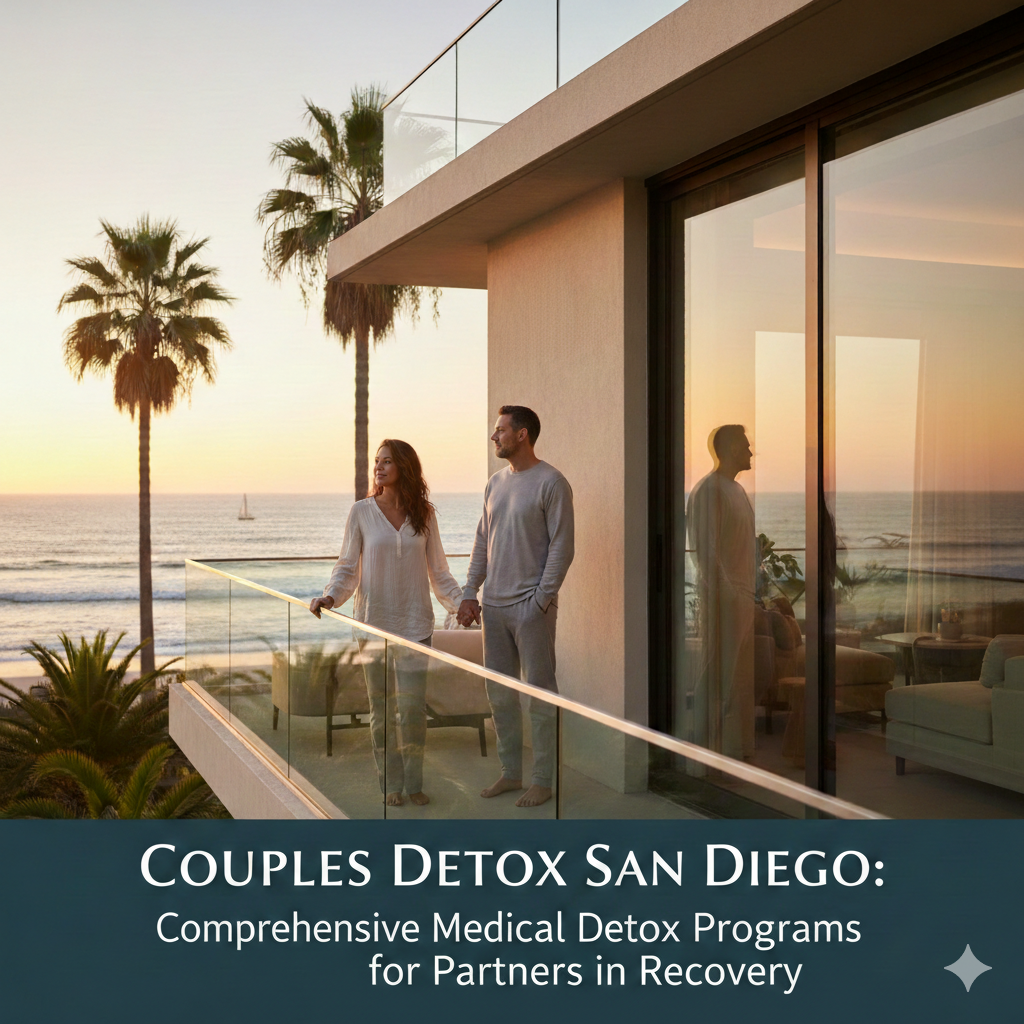
Couples Medical Detox in San Diego: Starting Recovery Together
Addiction rarely affects just one person in a relationship. When both partners struggle with substance use disorders, the path to recovery requires a specialized approach that honors the interconnected nature of their challenges. Medical detoxification for couples in San Diego offers a unique solution—allowing partners to begin healing together while receiving individualized clinical care.
Why Choose Couples-Focused Detox?
Traditional addiction treatment often separates partners, placing them in different facilities or programs. While this approach works for some, research from the National Institute on Drug Abuse reveals that Behavioral Couples Therapy (BCT) produces superior outcomes compared to individual treatment. Couples who detox together experience higher completion rates, reduced relapse, and improved relationship functioning.
The distinction matters because addiction within relationships creates distinct patterns. Codependency, enabling behaviors, shared triggers, and mutual trauma require specialized attention that standard programs don't provide. Couples detox programs in San Diego integrate relationship-focused interventions alongside medical protocols, addressing both physiological withdrawal and relational dynamics simultaneously.
Medical Safety: The Foundation of Couples Detox
Regardless of whether partners detox together or separately, medical safety remains paramount. Withdrawal from alcohol and benzodiazepines can be life-threatening without proper supervision. Opioid withdrawal, while rarely dangerous, causes intense discomfort that increases relapse risk without medication-assisted treatment.
San Diego's specialized couples detox facilities provide 24-hour medical monitoring with board-certified physicians and addiction medicine specialists. Each partner receives individualized assessment and treatment protocols based on their specific substances, medical history, and withdrawal risks.
Common Substances Requiring Medical Detox:
Alcohol: Requires careful medication management to prevent seizures and delirium tremens. Withdrawal typically lasts 5-7 days with medication support.
Opioids: Including heroin, fentanyl, and prescription painkillers. Medication-assisted treatment using buprenorphine significantly reduces discomfort and cravings.
Benzodiazepines: Requires slow tapering over days or weeks to prevent dangerous complications.
Stimulants: Methamphetamine and cocaine withdrawal focuses on psychiatric stabilization, nutritional support, and managing depression and anxiety.
What Couples Can Expect During Detox
Most couples' first question involves living arrangements. Quality programs offer private couples' suites where partners can stay together, providing mutual support during the vulnerable withdrawal period. However, medical needs sometimes necessitate temporary separation if one partner requires intensive monitoring or different detox protocols.
Treatment balances time together with individual work. Partners participate in:
- Individual therapy addressing personal trauma, mental health conditions, and recovery goals
- Couples counseling focused on communication patterns, relationship triggers, and healthy boundaries
- Group therapy connecting with other couples facing similar challenges
- Medical monitoring with 24/7 nursing care and physician oversight
Holistic therapies—yoga, meditation, nutritional counseling, acupuncture—complement medical treatment, supporting the body's natural healing while teaching healthy coping mechanisms.
Dual Diagnosis: Treating Co-Occurring Disorders
Approximately half of individuals with substance use disorders also experience mental health conditions like depression, anxiety, PTSD, or bipolar disorder. Comprehensive couples detox programs provide integrated dual diagnosis treatment, addressing both issues simultaneously.
Each partner receives psychiatric evaluation and appropriate medication management. This integrated approach is critical—attempting to treat addiction without addressing underlying mental health conditions significantly increases relapse risk.
Insurance Coverage for Couples
The practical question of cost concerns most couples considering treatment together. Good news: most major insurance plans cover medical detox for both partners when medically necessary. PPO plans from carriers like Blue Cross Blue Shield, Aetna, Anthem, Cigna, and United Healthcare typically provide coverage.
Challenges arise when partners have different insurance companies. Quality facilities verify benefits for both individuals separately, coordinating coverage and providing transparent cost information upfront. Some programs offer payment plans or reduced rates when both partners admit simultaneously.
For couples without insurance or with limited coverage, San Diego County Behavioral Health Services provides sliding-scale options. The 2-1-1 San Diego database lists comprehensive community resources for affordable treatment.
Specialized Programs for Diverse Couples
San Diego's couples detox programs serve diverse populations with culturally competent care:
LGBTQ+ Couples: Affirming environments that acknowledge minority stress and discrimination while providing inclusive, non-judgmental treatment.
Veterans: Programs addressing combat trauma, PTSD, and service-related substance use alongside relationship healing.
Young Adults: Developmentally appropriate treatment for emerging adults navigating career, education, and identity formation.
Professionals: Executive programs offering privacy, connectivity, and confidential care that protects careers.
Faith-Based: Christian and spiritually-oriented options integrating religious principles into recovery.
Beyond Detox: The Continuum of Care
Medical detoxification is only the beginning. Most couples require 30-90 days of residential treatment following detox to develop skills, process underlying issues, and establish recovery foundations.
Seamless transitions from detox to residential care maintain therapeutic momentum. Following residential treatment, intensive outpatient programs allow couples to practice recovery skills while returning to work and daily life. Some couples benefit from sober living homes that accommodate partners, providing structure and peer support during the transition to independent living.
Verifying Quality and Credentials
Patient safety demands verification of facility credentials. Legitimate couples detox programs maintain:
- State certification through the California Department of Health Care Services
- National accreditation from The Joint Commission or CARF International
- Board-certified medical directors specializing in addiction medicine
- Licensed therapists trained in couples therapy modalities
- Transparent information about costs, approaches, and outcomes
The DHCS Licensing & Certification Search allows prospective patients to verify any California facility's legal status. SAMHSA's FindTreatment.gov provides a federal database for locating specialized services.
Frequently Asked Questions
Can we stay in the same room? Most programs offer private couples' suites, though medical needs may sometimes require temporary separation.
What if we're addicted to different substances? Programs routinely manage partners with different primary substances, individualizing medical protocols while integrating couples therapy.
Does insurance cover both of us? Generally yes, when medically necessary. Each partner's coverage is evaluated independently.
How long does detox take? Typically 5-10 days depending on substances involved. Alcohol and benzodiazepine detox usually requires 5-7 days; opioid detox may extend to 10 days.
Is couples detox more effective? Research shows couples who participate in treatment together have higher completion rates, reduced relapse, and improved relationship satisfaction compared to separate treatment.
Taking the Next Step
Recovery from addiction challenges any individual. When both partners struggle, the complexity multiplies—but so does the potential for profound healing. The vulnerability required in detox, the honesty demanded by therapy, and the mutual support through difficulty can transform relationships damaged by addiction into partnerships rooted in authenticity and health.
If you and your partner are considering couples detox in San Diego, specialized care is available. Programs designed specifically for partners integrate clinical excellence with relationship-focused treatment, supporting both individual recovery and relational growth.
Ready to learn more? Our comprehensive guide covers everything couples need to know about detox in San Diego, including detailed information about insurance coverage, specialized populations, treatment approaches, and how to choose the right program. Read the complete guide to Couples Detox San Diego for in-depth answers to all your questions.
For immediate support:
- SAMHSA National Helpline: 1-800-662-4357 (24/7)
- San Diego Access and Crisis Line: 1-888-724-7240 (24/7)
- FindTreatment.gov: Federal treatment locator with specialized filters
Recovery begins with a single decision. You don't have to face this alone—and you don't have to face it apart.