Could Thousands of Merchant Cash Advance Judgments Face New Challenges After New York's Latest Lawsuit?

For many small business owners, the merchant cash advance industry remains one of the least understood areas of commercial finance.
Most business owners focus on obtaining capital.
Few spend time thinking about arbitration clauses, collection procedures, default judgments, or bank restraints until they become a reality.
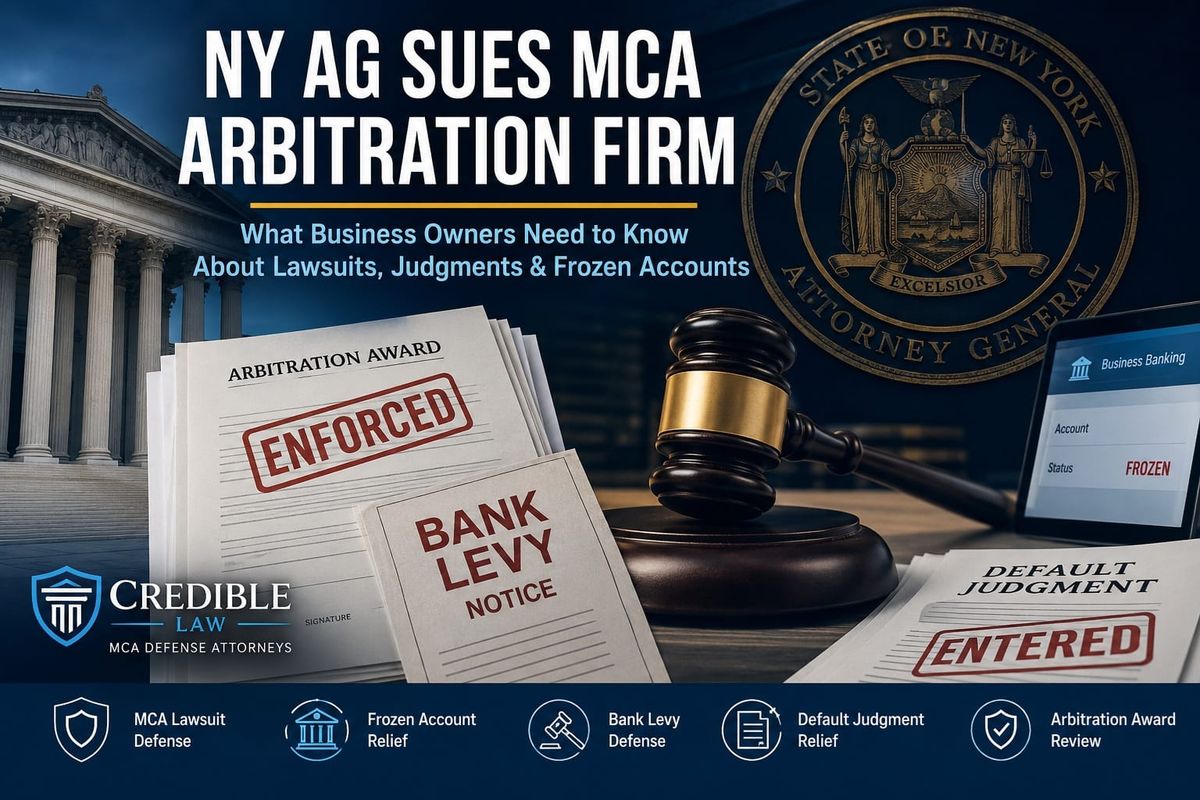
That may be why a recent lawsuit filed by the New York Attorney General is attracting significant attention among attorneys, business owners, and financial professionals nationwide.
The lawsuit targets Rapid Ruling, an arbitration company that allegedly presented itself as an independent dispute resolution provider while facilitating arbitration proceedings involving merchant cash advance companies.
The allegations remain subject to litigation, but the case raises broader questions about how merchant cash advance disputes are resolved and how arbitration awards are later used in collection efforts.
The Hidden Path From Funding to Collection
Many business owners assume that if a dispute arises with a funding company, they will eventually have their day in court.
That is not always what happens.
In many merchant cash advance agreements, disputes are directed into arbitration rather than traditional litigation.
When an arbitration award is entered, the process can move quickly.
That award may later become the basis for:
- Court judgments
- Collection actions
- Bank restraints
- Account freezes
- Levies
- Enforcement proceedings
For businesses already facing cash flow challenges, the consequences can be immediate and severe.
Why Arbitration Matters
Arbitration is often marketed as a faster and less expensive alternative to litigation.
In theory, both parties receive a neutral decision-maker who evaluates the facts and issues a binding determination.
The integrity of the process depends heavily on the independence of the arbitration provider.
Whenever regulators question whether a dispute resolution process was genuinely impartial, businesses naturally begin asking whether prior outcomes deserve closer examination.
That is one reason the Rapid Ruling litigation has attracted so much attention.
The Growing Scrutiny of Merchant Cash Advance Practices
Over the last several years, regulators, courts, and lawmakers have increasingly examined various aspects of the merchant cash advance industry.
Areas of scrutiny have included:
- Collection practices
- Disclosure requirements
- Confessions of judgment
- Arbitration procedures
- Effective financing costs
- Revenue reconciliation provisions
- Small business protections
While many funding companies continue to operate legally and provide valuable access to capital, enforcement actions have highlighted concerns about certain practices used by some industry participants.
The result is a legal landscape that continues to evolve.
What Business Owners Are Asking Right Now
Following news of the lawsuit, several common questions have emerged.
Can a Prior Arbitration Award Be Challenged?
Possibly.
The answer depends on numerous factors, including the arbitration provider, contract language, procedural history, governing law, and the specific facts of the case.
Does the Lawsuit Automatically Invalidate Existing Judgments?
No.
A regulatory lawsuit does not automatically erase judgments or arbitration awards.
However, businesses facing enforcement actions may wish to review their circumstances with qualified legal counsel to determine whether any defenses or remedies may exist.
What If My Bank Account Is Already Frozen?
Time often becomes the most important factor.
Once collection efforts begin, delays can significantly limit available options.
Prompt action may help preserve rights and potential remedies.
Lessons for Small Business Owners
Regardless of how the Rapid Ruling litigation ultimately concludes, the case offers several important lessons.
Business owners should:
- Read financing agreements carefully
- Understand arbitration provisions
- Monitor legal notices
- Respond promptly to collection actions
- Review judgments immediately
- Seek guidance before enforcement efforts escalate
Many businesses wait until after a levy or account restraint occurs before seeking help.
At that stage, available options may be narrower than they would have been earlier in the process.
Looking Ahead
The New York Attorney General's lawsuit may become one of the most closely watched legal developments affecting the merchant cash advance industry this year.
Its impact could extend beyond a single arbitration provider and influence broader discussions surrounding dispute resolution, collection practices, and small business protections.
As the case develops, business owners facing MCA lawsuits, arbitration awards, frozen accounts, or collection actions should pay close attention to the outcome and how courts respond to the allegations being raised.
For a detailed breakdown of the lawsuit and its potential implications, read the full analysis at Credible Law:
https://crediblelaw.com/ny-ag-sues-mca-arbitration-firm/
This article is provided for informational purposes only and should not be considered legal advice. Every case involves unique facts and legal considerations.